Pass the Word: Vermont's Underground Supper Clubs Are Feeding Something Bigger Than Hunger
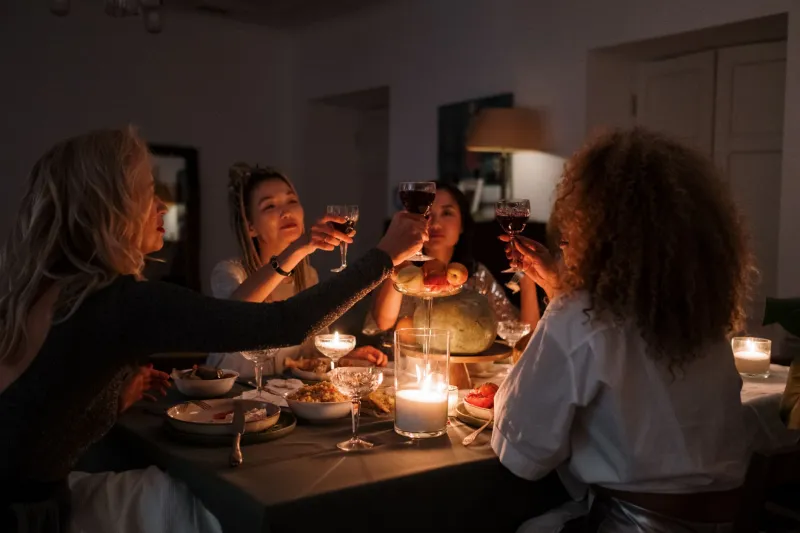
There's no sign out front. There's no Yelp listing, no reservation system, no Instagram grid of plated courses with golden-hour lighting. The address gets passed by text, usually a day or two before. You bring a bottle of something local if you can, show up at the door, and find yourself in someone's living room with eleven strangers who are about to become, at minimum, your dinner companions and possibly your friends.
This is Vermont's supper club scene, and it is considerably more alive than most people outside of it realize.
A Scene That Doesn't Advertise Itself
The term "supper club" covers a lot of territory nationally — from ticketed pop-ups in urban lofts to monthly gatherings in suburban basements. In Vermont, the version that's been quietly expanding over the past several years has a specific texture: small, personal, sourced almost entirely from within the state, and run by home cooks who have no particular interest in opening a restaurant but have a great deal of interest in feeding people well.
In Brattleboro, a cook named Sylvie Tremblay has been hosting what she calls her "Friday table" for three years. It started as a way to use up a surplus of vegetables from her CSA share and feed a few friends. It has since evolved into a monthly dinner for fourteen people, with a rotating guest list built largely through word of mouth and a sliding-scale suggested contribution that covers ingredients and a little extra.
"I never set out to run a business," she says, setting a pot of cider-braised pork shoulder on the table — the pork from a farm in Westminster, the cider from an orchard she's been buying from since the first year she moved to Vermont. "I set out to cook a really good dinner and share it with people who cared about where the food came from."
That combination — genuine hospitality plus rigorous sourcing — is the throughline in nearly every Vermont supper club worth knowing about.
The Economics of Eating Together
One of the more interesting aspects of this scene is how these dinners handle money. Most operate in a gray zone that isn't quite commercial dining and isn't quite a potluck. Hosts typically ask for a contribution — somewhere between fifteen and forty dollars per person, depending on the menu and the crowd — that covers the cost of ingredients and occasionally generates a modest return for the cook's labor.
For Sylvie, the math works out to roughly what she'd spend anyway on a nice dinner for herself, multiplied by the number of seats at the table. "I'm not getting rich," she says, laughing. "But I'm not spending my own money to feed fourteen people, either. It's more like a community kitchen than a business."
In Montpelier, a couple named Dara and Owen Fiske runs a quarterly dinner they call simply "the long table" — a reference to the single, extended farmhouse table that takes up most of their dining room when all the leaves are in. Their model is slightly different: they partner directly with two or three local farms each season, sourcing the entire menu from those relationships and giving a portion of the contributions back to the farmers as a kind of informal sponsorship.
"We want the farmers to be part of the story," Dara explains. "Sometimes they come to dinner. Sometimes they just send us a note about what they've got that week and we build the menu around it. Either way, the people at the table are eating food with a face attached to it."
More Than a Meal
If the economics of these dinners are interesting, the conversations they generate are arguably more so. Because the guest lists are curated — not exclusive in a gatekeeping sense, but intentional — the people around these tables tend to be genuinely engaged with the questions the food raises. Where does this come from? Who grew it? What did it cost them to grow it? What would it cost if we actually priced in the labor?
Sylvie has started ending her dinners with what she calls a "sourcing roundup" — a quick, informal walk through every ingredient on the table and where it came from. It takes about ten minutes and invariably sparks a conversation that goes another hour.
"People leave knowing something they didn't know when they arrived," she says. "About a farm, about a food system, about what it actually takes to eat this way. That feels like the point."
In this sense, Vermont's supper clubs are doing something that neither restaurants nor farmers markets quite manage: creating a space where food literacy gets built in real time, over a shared meal, without anyone being lectured at.
Access, Inclusion, and the Sliding Scale
One tension that thoughtful hosts in this scene grapple with openly is access. Invitation-only dinners built around premium local ingredients can easily become a thing for people with disposable income and the right social connections. Several Vermont supper club hosts are actively working against that tendency.
In Burlington's Old North End neighborhood, a cook named Marcus Webb has been running monthly dinners specifically designed to bring together residents from different economic backgrounds. His sliding scale runs from ten dollars to fifty, and he fills the table through a mix of personal invitations and partnerships with local community organizations. The menu is built entirely from what he can source locally, with cost in mind — dried beans from a Vermont grower, whole chickens from a farm that sells at accessible prices, vegetables from a gleaning program that collects surplus from area farms.
"Good local food shouldn't be a luxury," he says flatly. "If my dinners only work for people who can pay forty dollars, I'm not actually building community. I'm building a club."
His dinners are full every month.
What the Table Is Really For
There's a long tradition in Vermont of people feeding each other as a form of community infrastructure — the church supper, the barn raising meal, the harvest dinner. What's happening in these modern supper clubs isn't a departure from that tradition so much as a reinvention of it, updated for a moment when food systems feel fragile and community feels harder to come by.
The cooks running these tables aren't trying to compete with restaurants or replace the farmers market. They're doing something more intimate and, in some ways, more ambitious: they're using a shared meal to argue, quietly but persistently, that local food is worth caring about, that cooking from your region is an act of connection, and that the table is still one of the best places humans have ever invented for figuring out how to be in the world together.
Sylvie Tremblay puts it simply, clearing plates at the end of a long Friday dinner while her guests linger over the last of a local hard cider. "I just want people to leave full and a little more awake," she says. "Full from the food, and awake to where it came from. If that happens, it was a good night."