Cold and Clever: Vermont's Root Cellar Sellers Are Stocking Your Winter Table with Something Special
By late November, most people assume the Vermont local food season is over. The last of the squash has moved through the farmers markets, the CSA boxes have wrapped up, and the food conversation shifts to who's got good maple syrup and whether the ski lodges are doing anything interesting with their menus.
But down a dirt road in Craftsbury, in a converted barn in Putney, and beneath a farmhouse in the Northeast Kingdom, something else is happening. Cellars are full. Crates are stacked. And a loose network of growers who've quietly mastered the art of cold storage is getting ready to sell.
Meet Vermont's root cellar entrepreneurs — and the surprisingly abundant winter food economy they've built in the dark.
The Gap Nobody Noticed
For years, the local food conversation in Vermont centered on summer and fall abundance. Tomatoes, corn, zucchini, berries — the warm-season harvest got all the attention and most of the infrastructure. But anyone paying close attention noticed a consistent gap: from December through April, the local supply chain got thin fast.
Joanna Fitch noticed it early. She and her husband run a small diversified farm outside of Greensboro, and about eight years ago she started experimenting with storage crops as a way to extend their selling season. "We were watching our customers drive to the grocery store in February for root vegetables that we could absolutely be growing and storing ourselves," she says. "It felt like a missed opportunity."
She started small — a few hundred pounds of carrots, some celeriac, a trial run of storage beets. She built out an insulated root cellar with proper humidity control and spent two winters figuring out what worked. Now she moves several tons of storage crops between November and April, selling through a combination of a winter CSA share, direct sales to restaurants, and a small online ordering system she set up with help from a local tech cooperative.
What Actually Lives in a Root Cellar
The variety of what these growers are storing might surprise you. Yes, there are carrots and potatoes — but the more interesting story is in the edges.
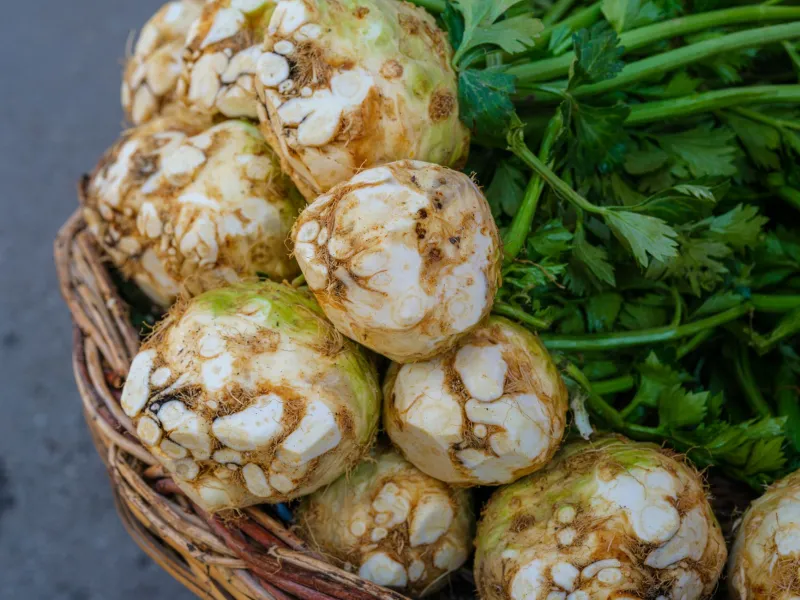
Parsnips, for instance, actually improve in storage. The starches convert to sugars after a hard frost, and a properly cellared parsnip in February is sweeter and more complex than anything you'd find in a grocery store. Celeriac — that knobby, underappreciated root that tastes like celery crossed with something earthier — stores beautifully and has developed a devoted following among Vermont chefs who use it in everything from purées to gratins.
Then there are the varieties most people have never encountered. Joanna grows a storage turnip called Gilfeather — a Vermont heirloom variety that's actually been designated the official state vegetable — that's milder and creamier than the standard grocery store turnip. She also cellars several types of storage radishes, including a large daikon-style variety that holds for months and develops a gentle sweetness over time.
"People come to pick up their winter share and they're always a little surprised by what's in there," she says. "They expect root vegetables to be boring. And then they taste a February parsnip and they kind of lose their minds a little."
The Science of the Dark
What makes cold storage work isn't magic — it's careful management of temperature and humidity. Most root vegetables want to be cold but not frozen, and humid but not wet. Different crops have different sweet spots. Carrots and beets like it close to freezing with high humidity. Potatoes want it a little warmer and drier. Squash prefers cool but not cold, and needs airflow.
Getting those conditions right in a Vermont winter requires either a purpose-built root cellar or a seriously well-managed existing space. Pete and Rayna Solis, who farm a few acres in Royalton, converted an old dairy barn foundation into a multi-zone storage facility over the course of three winters. "We basically built a series of rooms within rooms," Pete explains. "Each zone has different insulation, different venting. It sounds complicated but it was mostly just paying attention and iterating."
Their setup now handles over a dozen different crop types simultaneously, and they've developed a storage calendar that maps out which crops peak in flavor at different points through the winter — essentially curating the contents of each weekly delivery the same way a chef curates a seasonal menu.
The Buyers Who Found Them
The customer base for Vermont's root cellar economy is more diverse than you might expect. Restaurants are a big piece of it — chefs who've committed to local sourcing and don't want to abandon that commitment when the calendar turns. But there's also a growing cohort of home cooks who've discovered that winter cooking with real storage vegetables is a completely different experience than cooking with the pale, tired produce that travels thousands of miles to reach a grocery shelf in January.
"The texture is different," says one Burlington-based cooking instructor who sources from two different root cellar farms throughout the winter. "The flavor is different. You roast a locally stored carrot versus a grocery store carrot side by side, and it's not subtle. It's obvious."
Some growers have also found unexpected buyers in institutional settings — small schools, senior centers, and food co-ops that are actively looking for ways to keep local food in their supply chains year-round.
Filling the Gap, One Crate at a Time
What these growers are doing, collectively, is something the Vermont local food system has needed for a long time: proof that the season doesn't have to end just because it gets cold. The infrastructure is modest, the operations are small, and the economics are still being worked out. But the model is real, and it's growing.
Joanna Fitch is already planning her next expansion — a second cellar room dedicated entirely to heritage potato varieties, including a few she's sourcing from a seed library in New Hampshire that preserves pre-commercial cultivars. "I want people to understand that there's a whole world of flavor that basically disappeared when we standardized the food supply," she says. "Storage crops are a way back into that world."
And right now, in the cold and the dark, that world is quietly thriving.