The First Meal Wins: Meet the Vermont Food Entrepreneurs Who've Made Breakfast Their Business
For most of the food world, breakfast is an afterthought. It's the meal that gets squeezed between hitting snooze and checking emails, sustained by whatever's quickest and cheapest. Vermont, as usual, has other ideas.
Across the state, a scrappy and surprisingly sophisticated cohort of food entrepreneurs has staked their businesses on morning food—not as a convenience category but as a culinary statement. They're making granola that takes three days to produce, breakfast sauces that start with heirloom tomatoes grown down the road, and pastries that require sourcing flour from a mill two towns over. None of it is fast. All of it is intentional.
And it's working.
Granola as Craft Product
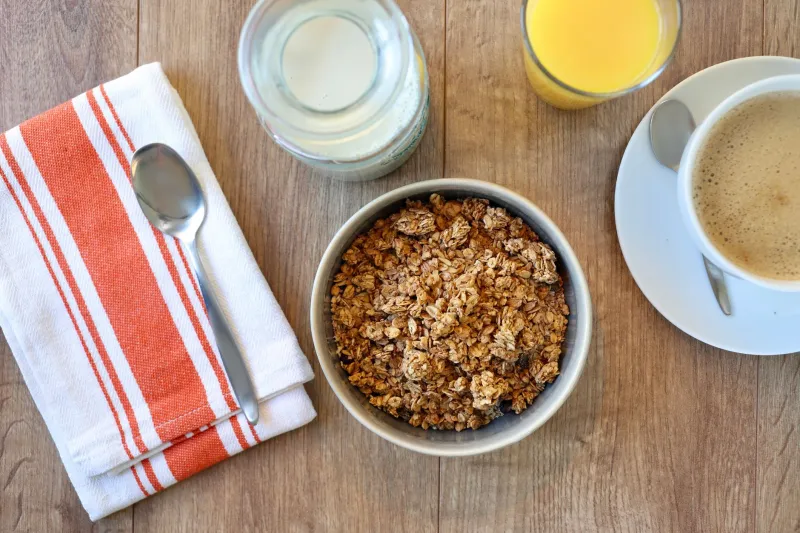
If you want to understand Vermont's breakfast economy, start with granola. It's the category that launched a dozen small businesses across the state and continues to be one of the most competitive shelves at any Vermont co-op or specialty food store.
Celia Marsh started Hollow Road Granola out of her home kitchen in Waitsfield eight years ago. What began as a farmers market side hustle has grown into a full production operation with distribution across New England. The secret, she'll tell you without hesitation, is restraint.
"Most commercial granola is basically candy," Celia says. "We use Vermont maple syrup as our only sweetener, rolled oats from a regional mill, and seeds and nuts we source as close to home as we can get. That's it. The ingredient list is short because the ingredients are actually good."
The granola gets a low, slow bake—nearly two hours—that produces clusters with a depth of flavor you don't get from high-heat shortcuts. It's the kind of product that makes people reconsider what they thought they knew about a pantry staple.
Celia isn't alone. Within a twenty-mile radius of her operation, there are at least four other small-batch granola producers, each with a distinct personality. One leans into savory profiles with sunflower seeds and rosemary. Another does a rotating seasonal flavor that changes with what's available from local farms. The competition is fierce and, by all accounts, friendly.
The Breakfast Sauce Nobody Saw Coming
Perhaps the most unexpected corner of Vermont's morning food scene is the emergence of what producers are calling breakfast sauces—condiments specifically designed for eggs, toast, and grain bowls that go well beyond the standard hot sauce or ketchup.
Marcus and Tina Bergeron launched their company, North Table Foods, three years ago from their home base in St. Johnsbury with a single product: a roasted tomato and herb sauce built for eggs. It was born out of a practical frustration.
"We kept having these incredible local tomatoes in August and nothing interesting to do with them on a Tuesday morning," Marcus explains. "We wanted something with depth and brightness that wasn't just salsa."
The sauce—slow-roasted heirloom tomatoes, fresh basil, a hit of apple cider vinegar from an orchard they work with directly—sold out at their first farmers market in under two hours. They've since added a mushroom and miso version and a fermented hot honey that's become something of a cult item in Burlington food circles.
What's notable about North Table, and about many of Vermont's breakfast-focused producers, is how deliberately they've embedded themselves in the local food network. Their tomatoes come from one farm. Their honey from one beekeeper. Their vinegar from one orchard. The supply chain is short and visible, which is both a values statement and, increasingly, a marketing advantage.
Destination Breakfast: Restaurants That Own the Morning
Beyond packaged goods, a handful of Vermont restaurants have made breakfast their primary identity—and their primary revenue driver.
The Morning Table in Stowe opened four years ago with a menu that changes weekly based on what's available from a tight network of local farms and producers. Chef and owner Simone Archambault made a deliberate choice to close by 2 p.m. and focus entirely on the breakfast and brunch window.
"People thought I was crazy," she says. "But I didn't want to do five things adequately. I wanted to do one thing exceptionally."
That one thing includes a rotating egg dish built around whatever the farm down the road has in abundance, house-made pastries using locally milled flour, and a grain bowl program that shifts with the seasons. The restaurant sources its dairy from a single small farm in Morrisville. The maple syrup is from a sugarhouse Simone has worked with since she opened. Nothing on the menu is accidental.
The Morning Table now has a waitlist on weekends that stretches past an hour. Visitors from Boston and New York have started building trips around it.
Why Breakfast? Why Now?
There's a practical logic to the breakfast boom. Morning food tends to be ingredient-forward in a way that dinner isn't always—it's harder to hide behind a heavy sauce when the centerpiece is an egg or a piece of toast. That transparency plays perfectly into Vermont's food culture, where provenance and quality are the primary conversation.
But there's also something more philosophical going on. Breakfast is the meal most people eat at home, most days of the week. For Vermont's food entrepreneurs, capturing that daily ritual—convincing someone to reach for their granola, their breakfast sauce, their locally milled flour—is about more than revenue. It's about embedding local food into the fabric of everyday life.
Celia Marsh puts it simply: "If I can get into your morning routine, I've actually changed how you eat. That feels like it matters."
Vermont's breakfast entrepreneurs are betting that it does.