Every Last Bit: Vermont's Independent Butchers Are Making the Whole Animal Matter Again
Walk into a conventional grocery store meat department and you'll find the same dozen cuts arranged under fluorescent lights like they've always been there, like they fell from the sky that way. Ribeyes. Chicken breasts. Pork chops. Tidy, boneless, context-free.
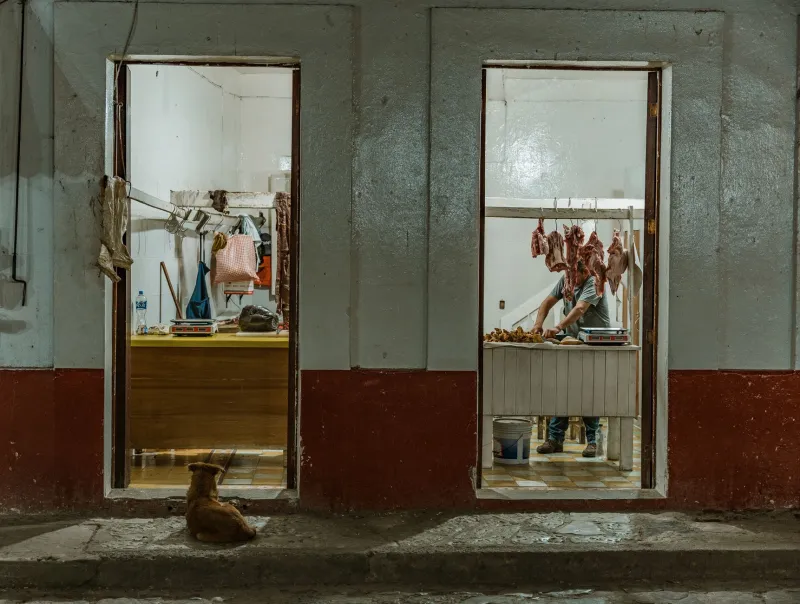
Walk into one of Vermont's growing number of independent butcher shops and you'll find something entirely different — a counter staffed by someone who can tell you the name of the farm the animal came from, explain why the bavette steak is criminally underrated, and talk you through braising a pork neck until you're genuinely excited about it. That's not an accident. It's a philosophy, and it's quietly reshaping how Vermonters think about meat.
The Cut That Got Left Behind
For most of the 20th century, American butchery was defined by efficiency. Industrial processing meant breaking animals down into the cuts that moved fastest — the ones consumers already recognized and restaurants could charge the most for. Everything else got ground up, rendered, or quietly disappeared into the supply chain. Whole-animal thinking didn't just fade; it got systematically eliminated.
But Vermont's independent butchers are pushing back. Hard.
Shops across the state — from the Northeast Kingdom to the Champlain Valley — are sourcing whole or half animals directly from regional farms and doing the full breakdown in-house. That means every primal, every secondary cut, every piece of trim gets accounted for intentionally. Oxtail. Beef cheeks. Lamb necks. Pork fatback. Leaf lard. Cuts that most American shoppers have never seen at a retail counter are showing up in Vermont display cases with handwritten signs and enthusiastic staff who know exactly what to do with them.
The goal isn't novelty. It's respect — for the animal, for the farmer who raised it, and for the craft of butchery itself.
Farmers as Partners, Not Vendors
What makes Vermont's butcher revival distinct isn't just technique — it's the relationships driving it. Many of the state's independent shops have moved well beyond transactional supplier arrangements. They're working with farmers season to season, sometimes breed by breed, to figure out what animals are coming and how to sell them completely.
That kind of coordination matters more than it might seem. When a butcher commits to taking a whole steer from a small farm, they're not just buying the tenderloin. They're buying the shank, the brisket, the offal, the bones. That commitment gives farmers real economic stability — the kind that makes it possible to keep raising animals on pasture without scaling up to industrial size. And it gives butchers the creative latitude to build a counter around what's actually available locally rather than ordering commodity cuts from a distributor.
It's a circular food economy in the most literal sense, and Vermont's agricultural landscape — dense with small and mid-size diversified farms — makes it unusually well-suited to support it.
Teaching the Counter
One of the most underappreciated parts of the nose-to-tail movement is education. The reason secondary cuts disappeared from American retail wasn't that people stopped liking them — it's that they stopped knowing what to do with them. Braising a lamb shoulder takes time and a little confidence. Breaking down a whole chicken feels intimidating if you've only ever bought boneless breasts. Cooking a beef heart well requires understanding that you're working with muscle, not organ.
Vermont's independent butchers have quietly become food educators. Many shops post recipes near the unfamiliar cuts. Butchers walk customers through cooking methods at the counter without making anyone feel dumb for asking. Some shops host occasional cutting demonstrations or informal classes, demystifying the whole process.
The payoff is real. Customers who learn to braise a pork shoulder or roast a whole chicken properly don't just come back — they start asking questions, getting curious, and eventually requesting cuts they never would have considered before. The counter becomes a conversation, not just a transaction.
Waste Not, and Mean It
Nose-to-tail butchery isn't just ethically satisfying — it makes economic sense, and Vermont's butchers are proving it. When every part of the animal has a purpose, the math changes. Bones become stock. Fat gets rendered into lard or tallow. Trim becomes house-made sausage, pâté, or cured products. Offal gets priced accessibly because it's not competing with a tenderloin — it's filling a different need entirely.
Some shops have gotten genuinely creative with the parts that might otherwise be overlooked. Smoked beef tongue tacos. Duck liver mousse. Lamb merguez made from the trim of animals sourced an hour down the road. These aren't gimmicks — they're the natural result of what happens when skilled butchers work with whole animals and refuse to let anything go to waste.
For customers, it also means access to some of the most flavorful, nutrient-dense parts of the animal at prices that undercut the premium cuts by a significant margin. Beef cheeks and pork neck bones are deeply delicious. They're also affordable. That combination matters in a food economy where eating well and eating locally can feel financially out of reach.
Heritage Techniques, Present-Day Purpose
There's something worth naming about the craft itself. The butchers leading this movement in Vermont aren't just trend-chasing — many have trained seriously, learning dry-curing, whole-animal breakdown, and charcuterie from mentors or through dedicated apprenticeships. The techniques they're using are old. The context they're applying them in is new.
Dry-aged beef. House-cured bacon made from heritage-breed pork. Fermented sausages. These are time-intensive, skill-intensive products that can't be rushed and can't be faked. In a state that has always valued making things carefully and making them well, that approach resonates.
It also creates something the industrial meat system fundamentally cannot: a product with a story. When you buy a lamb chop from a Vermont butcher who sourced the animal from a farm twenty miles away, raised on pasture, broken down by hand by someone who takes pride in the work — that chop carries meaning. It connects you to a place, a farmer, a set of choices about how food should be produced.
What It Means for Eaters
The Vermont butcher revival is good news for anyone who eats meat — and it's worth paying attention to even if you're cutting back. The model these shops are building is one where quality, transparency, and relationships matter more than volume and convenience. It's a counter-argument to the anonymous, consolidated meat system that dominates most of American retail.
It's also an invitation. Vermont's independent butchers are genuinely excited to talk about what they do, share what they know, and help you cook something unfamiliar with confidence. The only requirement is showing up and being willing to ask.
The whole animal is worth knowing. Vermont's butchers are making sure you get the chance.