Stocked from the Source: Vermont Home Cooks Who've Built Their Own Food Supply Chain
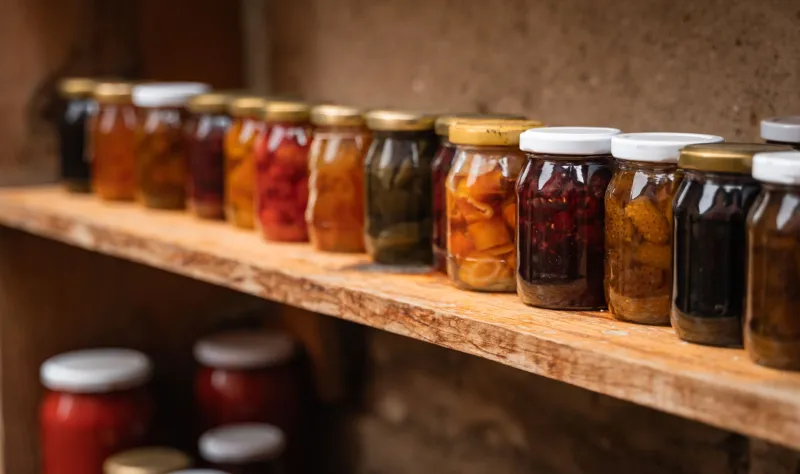
There's a shelf in Meredith Calloway's Montpelier mudroom that tells you everything you need to know about how she eats. Rows of Mason jars hold roasted tomatoes from a farm down the road in Calais, a dark amber maple syrup from a sugarhouse she's been buying from for six years, dried chanterelles she sourced from a forager friend, and a half-dozen varieties of dried beans from a seed-saving operation in the Northeast Kingdom. The grocery store, she'll tell you, is mostly for olive oil and coffee.
"I started thinking of my pantry like a restaurant thinks of its walk-in," Calloway says, laughing. "You want to know exactly where everything came from and exactly how it was made. The difference is I'm cooking for four people, not forty."
Calloway is part of a growing movement across Vermont — home cooks who've essentially built their own food supply systems, sourcing directly from local farmers, small-batch producers, and foragers to create pantries that are deeply seasonal, intensely regional, and surprisingly sophisticated. It's not prepper culture. It's not even strictly about self-sufficiency. It's about relationships, flavor, and a genuine rethinking of what it means to cook well in New England.
The Pantry as Philosophy
Ask any of these home cooks why they started down this path and you'll get a version of the same story: they tasted something that ruined everything else. A dry-farmed potato from a small operation in Craftsbury. A batch of raw-milk butter from a dairy in the Champlain Valley. A jar of fermented hot sauce from a farmstead market in Putney. Once you've had the real thing, the logic goes, the supermarket version starts to feel like a bad photocopy.
But building a local pantry from scratch takes more than enthusiasm. It takes time, organization, and a willingness to eat with the seasons in a way that most American food culture actively discourages. Vermont's home cooks who've cracked this puzzle tend to approach it with almost nerdy precision — spreadsheets tracking what they've put up, calendars mapped to farm pickup windows, relationships cultivated over years with producers who don't always advertise.
"There's a whole informal network," says Tim Beausoleil, a home cook in Burlington who's been sourcing locally for nearly a decade. "Once people know you're serious, you start getting texts. 'Hey, I've got a half-bushel of seconds from the apple press, you want them?' That's how you end up with forty quarts of applesauce."
Preservation as the Bridge Between Seasons
Vermont's growing season is short and unforgiving, which means that stocking a local pantry year-round is fundamentally a preservation project. The home cooks doing this well have become genuinely skilled at techniques that most American kitchens abandoned generations ago — water-bath canning, lacto-fermentation, cold cellaring, fat-packing, and the slow art of drying.
Sarah Dunmore, who lives on a few acres outside of Middlebury, runs what she half-jokingly calls "my annual August panic." That's when the tomatoes, peppers, and summer squash all come in at once and her kitchen turns into a small-scale cannery. She sources from two farms she's been buying from for years, supplementing what she grows herself, and puts up enough roasted tomatoes, salsa verde, and pickled vegetables to carry her through to mud season.
"People think it's this huge undertaking, and honestly, the first year it kind of is," she says. "But once you have the rhythm, it's just how you cook. You're not thinking about it as preservation — you're thinking about what you want to be eating in February."
Fermentation has become a particular obsession in this community. Inspired in part by Vermont's thriving craft fermentation scene, home cooks are making their own krauts, kimchi-style preparations using local vegetables, miso from Vermont-grown soybeans, and even vinegars from local apple scraps. The line between home cook and small-scale producer can get genuinely blurry.
The Relationships That Make It Work
What distinguishes this movement from simple farmers market shopping is the depth of the relationships involved. These home cooks aren't just buying from local producers — they're in ongoing conversation with them, often over years. They know when a farm had a rough season. They understand why a particular batch of cheese tastes different. They're the first call when something unexpected comes available.
"My cheese guy — and I say 'my' because that's genuinely how it feels — called me last fall because he had some wheels that had aged a little longer than expected," says Calloway. "They were incredible. Funky and sharp in this way that you'd pay a lot of money for at a specialty shop. I got six pounds for basically nothing because he knew I'd appreciate them."
This kind of informal economy runs beneath the surface of Vermont's more visible food scene. It's not quite a CSA, not quite a buying club, not quite a friendship — it's something particular to small-state food culture, where the distance between a home cook and the person who raised their food can be genuinely short.
What This Means for How Vermont Cooks Eat
The practical result of all this sourcing and preserving is a style of home cooking that's become increasingly distinctive — and distinctly Vermont. It's deeply seasonal in a way that goes beyond choosing local produce at the store. It's improvisational, built around what's in the pantry rather than what a recipe demands. And it's flavored by the specific terroir of this particular place: the minerality of the soil, the particular sweetness of late-season roots, the tang of raw-milk dairy.
"I cook totally differently now than I did ten years ago," says Beausoleil. "I used to start with a recipe and go buy ingredients. Now I start with what I have and figure out what to make. It sounds obvious, but it's actually a completely different way of thinking about food."
There's also something quietly political about it. In a food system that increasingly concentrates supply chains and homogenizes flavor, these Vermont home cooks are building something genuinely local — not as a brand identity, but as a lived practice. Every jar on Meredith Calloway's mudroom shelf represents a relationship, a season, and a decision to invest in the food economy right outside her door.
That might be the sweetest spot of all.