Putting Summer to Bed: Vermont's Chefs and Home Cooks Are Turning Preservation Into an Art Form
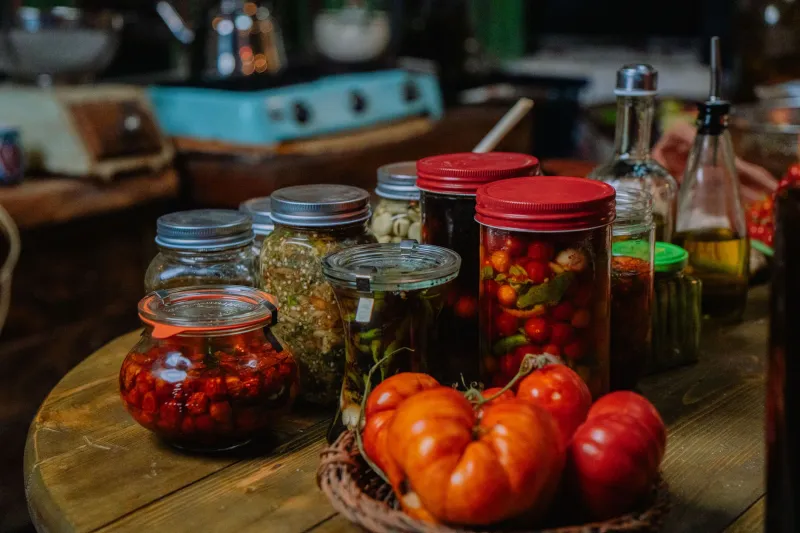
There's a particular kind of satisfaction in cracking open a jar of something you put up in August and tasting it in the dead of February. The smell alone—bright, acidic, alive—feels almost transgressive against the backdrop of frozen fields and gray skies. In Vermont, that moment isn't just a kitchen triumph. For a growing community of chefs and dedicated home cooks, it's the whole point.
Preservation has always been part of life up here. The winters are long, the growing season is short, and the distance from a reliable fresh supply chain has never fully disappeared, no matter how many grocery stores have moved in. But something has shifted in recent years. What was once a practical necessity—salt the meat, put up the beans, bury the carrots—has become a full-blown creative pursuit. Chefs are building winter menus around their summer preserves. Home cooks are swapping jars like currency. And the techniques themselves have gotten a lot more interesting.
More Than a Pickle
Walk into the prep kitchen at a handful of Vermont's farm-to-table restaurants in late September and you'll find something that looks less like a professional kitchen and more like a very organized science experiment. Rows of mason jars in various states of bubbling. Trays of sliced vegetables headed into smokers. Crates of just-harvested produce waiting their turn.
Chef Maya Tillotson, who runs a small but well-regarded restaurant in the Northeast Kingdom, has built her entire winter menu philosophy around what she calls "the August pantry." Every summer, she and her kitchen crew spend a concentrated few weeks preserving at scale—lacto-fermenting, pressure canning, smoking, and dehydrating the peak-season haul from two local farms she works with directly.
"People think of preservation as a backup plan," she says, pulling a jar of fermented green tomato relish off a shelf lined with what looks like a hundred of its siblings. "But we think of it as the main event. The flavors we get from a properly fermented tomato in January are actually different from a fresh one in July—not worse, just different. More complex. More interesting to cook with."
Her winter menu features dishes that would be impossible without this kind of foresight: a smoked beet and aged chèvre salad dressed with a brine-based vinaigrette, a braised pork shoulder glazed with house-made apple butter, a grain bowl built around fermented summer squash and dried heirloom beans from a farm just down the road.
The Root Cellar Renaissance
Not everything requires a jar. Vermont's agricultural past is full of root cellars—those cool, humid underground spaces that kept families fed through the coldest months—and a surprising number of people are returning to them, or improvising modern versions.
Dan Kowalczyk, a home cook and avid gardener outside of Montpelier, converted part of his unheated garage into a makeshift root cellar three years ago. He now stores potatoes, winter squash, celeriac, turnips, and several varieties of carrots through the winter, supplementing what he grows himself with bulk purchases from local farms at the tail end of harvest season.
"The flavor of a potato that's been stored properly for two months is genuinely better than a lot of what you buy at the store in December," he says. "The starches convert. They sweeten up. It's not a compromise—it's just a different product."
He's not alone. Across Vermont, interest in low-tech, low-energy storage methods has spiked alongside the broader local food movement. It makes sense: if you're committed to eating locally year-round, you either need to get creative about preservation or resign yourself to a pretty bleak winter table.
Smoke, Salt, and Serious Skill
For some practitioners, preservation has become a craft unto itself—less about stocking the pantry and more about the depth of flavor that certain techniques can unlock.
Ellie Marsh runs a small-batch operation out of her home kitchen in the Champlain Valley, selling smoked and cured goods at a handful of farmers markets and through a modest CSA-style subscription box. She started smoking vegetables almost by accident—a surplus of summer peppers that she didn't want to waste—and discovered that the results were extraordinary. Now she cold-smokes everything from cherry tomatoes to garlic to slabs of locally made tofu, selling them to home cooks and a few restaurant accounts.
"Smoke does something to a vegetable that nothing else quite replicates," she explains. "It adds this whole other dimension. And when you pair it with fermentation or a good salt cure, you're building flavors that have real staying power."
Her smoked garlic, in particular, has developed something of a cult following among Vermont cooks. It shows up in restaurant dishes, in home kitchens, in holiday gift boxes. It's become, in a small way, a local ingredient—the kind of thing that starts to define a regional food identity.
Preservation as Community
One of the more unexpected dimensions of Vermont's preservation culture is how social it's become. Canning bees—gatherings where groups of friends or neighbors work through a big batch of something together—have made a quiet comeback. Online communities trade recipes and troubleshoot ferments. Chefs share techniques with home cooks at farm dinners and food events.
There's something genuinely egalitarian about it. The skills required to put up a great jar of pickles or manage a root cellar aren't locked behind culinary school training. They're learnable, shareable, and deeply satisfying. And in a state where the relationship between community and food has always been close, that accessibility matters.
"I've taught probably forty people how to ferment in the last two years," says Tillotson. "Friends, neighbors, people who came to a dinner and got curious. It just spreads. And that feels right. This isn't knowledge that should live only in restaurant kitchens."
What the Jar Holds
There's a useful metaphor lurking somewhere in all of this. Vermont's preservation movement is, at its core, about holding onto something—the flavor of a particular summer, the effort of a particular farmer, the potential of a vegetable at its absolute best. It's about refusing to let the season end just because the calendar says it has.
In a food culture that increasingly prizes the fresh, the immediate, and the convenient, there's something quietly radical about a shelf full of jars. They represent patience, planning, and a certain faith that the work you do now will pay off later—in a meal that tastes like August, served in the middle of January, in a farmhouse kitchen somewhere in the Green Mountains.
That's a sweet spot worth finding.