Beyond the Patty: Vermont's Quietly Revolutionary Burger Scene
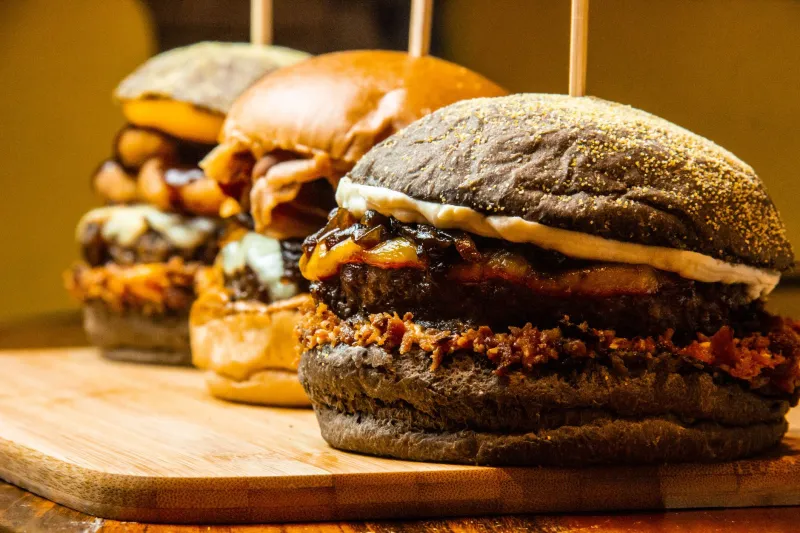
There's a certain kind of food snobbery that turns its nose up at the burger. Too casual, too simple, too American in all the wrong ways. Vermont's most creative chefs have never had much patience for that attitude. Here in a state where a farmer can tell you the name of the cow that became your dinner, the burger has become something worth taking seriously — not in a precious, over-thought way, but in the best possible sense. It's comfort food with a conscience, and it tastes like it.
Meat Matters: The Heritage Breed Difference
Walk into enough Vermont kitchens and you'll start to notice a pattern. The chefs who are making the most talked-about burgers aren't sourcing from broadline distributors. They're on a first-name basis with the ranchers raising their beef, and many of them have strong opinions about breed.
Highland cattle, Red Devon, Belted Galloway — these aren't names you'd typically see on a fast-casual menu, but in Vermont, they're becoming part of the conversation. Heritage breeds tend to grow more slowly than conventional beef cattle, which means more time for intramuscular fat to develop. The result is beef with a deeper, more complex flavor profile — something that actually holds up to toppings without getting lost in the shuffle.
At a handful of Burlington-area spots, chefs are grinding their beef in-house every morning rather than taking pre-formed patties from a bag. It sounds like a small detail, but it makes a real difference. Freshly ground beef has a looser, more open texture that lets heat move through it differently. It browns better. It stays juicier. And when you're working with grass-finished beef from a Vermont farm, you want every bit of that flavor to come through.
The Cheese Question (And Vermont Has Answers)
Here's where things get genuinely exciting. Vermont is home to some of the finest small-production cheese in the country, and local chefs have figured out that a thoughtfully chosen Vermont cheese can do more for a burger than a generic processed slice ever could.
Think about what's available: washed-rind semi-softs that melt into something almost sauce-like, aged cheddars with a sharpness that cuts through rich beef fat, fresh chèvre from small goat dairies that adds a tangy brightness you wouldn't expect. Some chefs are even experimenting with blue cheeses — the kind with a little funk and a lot of personality — crumbled on top of a smash-style patty with caramelized onions. It sounds like a lot, but when every ingredient comes from within a few counties of where you're sitting, it all makes a strange, satisfying kind of sense.
The relationship between Vermont's cheesemakers and its restaurant community has been quietly deepening for years. Chefs reach out to creameries directly, sometimes commissioning specific aging times or asking for wheels that didn't quite make the cut for retail — perfectly good cheese that happens to be ideal for melting. It's a collaboration that benefits everyone, and the burger is one of its most delicious outcomes.
Pickles, Condiments, and the Art of Restraint
A great burger is really a study in balance. Fat, acid, salt, sweetness — you need all of them, and you need them in the right proportions. Vermont chefs are paying close attention to that equation, and many of them are making their own pickles and condiments rather than reaching for the standard-issue stuff.
House-fermented dill pickles. Apple cider vinegar-based bread-and-butters. Tomato jams made from late-season heirloom varieties. Hot sauces built from locally grown peppers. These aren't just garnishes — they're doing real structural work, providing the acidity and brightness that keeps a rich, well-marbled patty from feeling heavy. Some kitchens are leaning into Vermont's maple tradition in unexpected ways, using just a whisper of syrup in a house-made aioli or a smoked maple glaze on thick-cut bacon from a local pork producer.
The restraint is important here. The best burgers in Vermont right now aren't the ones stacked with twelve ingredients competing for attention. They're the ones where every element has a reason to be there — where the chef has made a clear decision about what this burger is supposed to taste like and then executed that vision with good ingredients and clean technique.
Casual Done Right
One of the things that makes Vermont's burger scene interesting is that it spans a pretty wide range of settings. You'll find excellent locally sourced burgers at white-tablecloth farm-to-table restaurants where they appear as a lunchtime offering or an unpretentious bar menu staple. But you'll also find them at genuinely casual spots — counter-service places, converted barns, the kind of joints with mismatched chairs and local beer on draft — where the sourcing is just as rigorous even if the vibe is considerably more relaxed.
That accessibility matters. One of the criticisms sometimes leveled at farm-to-table dining is that it's exclusionary — that it prices out the very communities that grow and raise the food being celebrated. The burger, at its best, pushes back against that. It's a democratic food. When a chef can serve a genuinely outstanding burger made with local beef and Vermont cheese at a price point that doesn't require a special occasion, that's a real achievement. It means the values of the local food movement are reaching people who might never sit down for a tasting menu.
Why This Moment Feels Different
Vermont has always had good beef. The state's pastoral landscape — the rolling hills, the small mixed farms, the grass that stays green well into fall — produces cattle that are well-suited to quality beef production. What's changed is the infrastructure around it: the direct relationships between farmers and chefs, the growing number of small processors who can handle local animals, and a dining public that's increasingly curious about where their food comes from.
There's also something happening culturally. After years of chasing novelty — the rarest ingredients, the most technically demanding preparations — a lot of chefs and diners are finding their way back to simplicity. Not laziness, but the kind of focused, intentional simplicity that asks: what does this ingredient actually taste like, and how do I let it shine?
The Vermont burger, at its best, is an answer to that question. It's a reminder that farm-to-table isn't a style or an aesthetic — it's a set of relationships and a commitment to quality that can show up in the most unexpected places. Even between two buns.
So next time you're in Vermont and you see a burger on the menu, maybe give it a second look. Ask where the beef comes from. Ask about the cheese. Chances are, there's a story behind it — and a very good meal waiting at the end of it.