Wild at Heart: How Vermont's Foragers Are Bringing the Forest to the Table
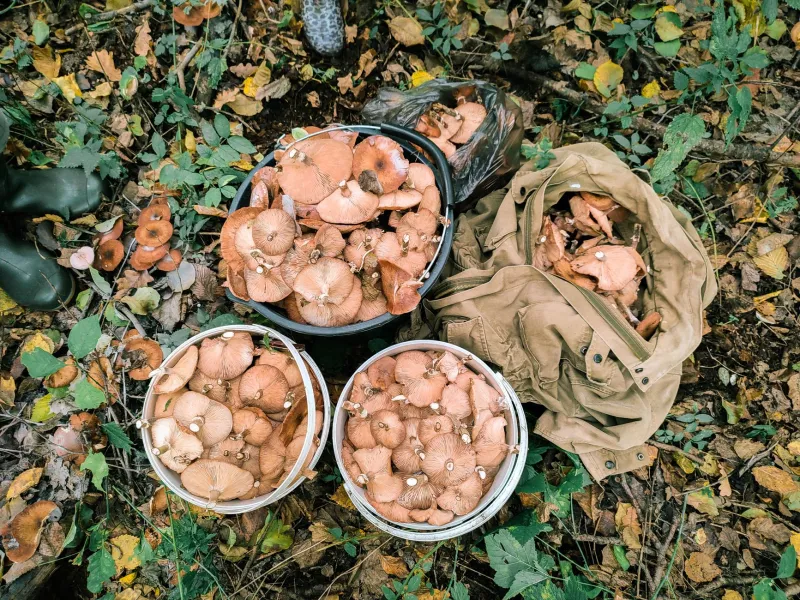
Somewhere in the hardwood hills of central Vermont, a chef is crouched at the base of an oak tree, brushing leaf litter away from a cluster of hen-of-the-woods mushrooms the size of a dinner plate. Her restaurant opens in four hours. She is grinning.
This is farm-to-table taken one step further back — past the farm, past the tilled soil, past the seed catalog. This is the forest-to-table movement, and in Vermont, it's growing as fast as the ramps do in April.
Foraging — the practice of harvesting wild plants, fungi, and other edibles from natural environments — is hardly new. Indigenous Abenaki communities have gathered from Vermont's forests and waterways for thousands of years, and generations of rural Vermonters maintained a working knowledge of what the land offered between harvests. But somewhere along the way, that knowledge thinned out. Supermarkets got bigger. Wild ingredients started to feel exotic, even risky. And a whole vocabulary of edible abundance — fiddleheads, wood sorrel, black trumpets, spicebush — faded from everyday cooking.
Now it's coming back, and it's coming back with serious culinary ambition.
The Foragers Leading the Way
Vermont has developed a small but dedicated community of professional foragers and educators who are doing the work of rebuilding that lost knowledge base — and making it accessible to people who didn't grow up learning which mushrooms will kill you.
Guided foraging walks have become increasingly popular across the state, offered through farms, nature centers, and independent practitioners who combine ecological education with hands-on harvesting. These aren't just novelty experiences for tourists (though they've become a genuine draw for visitors to the region). They're also serving a growing population of home cooks and food enthusiasts who want a deeper relationship with what they eat.
"People come out here thinking they're going to learn the names of a few mushrooms," says one foraging educator who leads walks in the Mad River Valley. "What they actually learn is how to pay attention. Once you start seeing the forest as a food system, you can't unsee it."
That attentiveness is central to the ethics of responsible foraging — a set of principles that the Vermont foraging community takes seriously. Sustainable harvesting means never taking more than a fraction of what's available in any given spot, avoiding rare or ecologically sensitive species, and understanding the role each plant or fungus plays in the broader ecosystem. The goal isn't extraction. It's participation.
Chefs Embracing the Wild
The culinary world has been paying attention. Across Vermont, a growing number of restaurant chefs have woven foraged ingredients into their menus — not as a gimmick, but as a genuine expression of hyperlocal, seasonal cooking.
In Burlington, several farm-to-table restaurants now work directly with local foragers, treating them like any other trusted supplier. The difference is that the "harvest" changes week to week, sometimes day to day, depending on what the season and the weather decide to offer. That unpredictability is part of the appeal — it forces creativity and keeps menus genuinely alive.
Spring brings the season's most celebrated wild ingredients: ramps (wild leeks) with their assertive garlicky bite, fiddleheads coiled tight and tasting faintly of asparagus and green things, and the first morel mushrooms pushing up through the leaf duff. Summer shifts to chanterelles and black trumpets, wild berries, and fragrant herbs like bee balm and wood sorrel. Fall is mushroom season in earnest — maitake, chicken-of-the-woods, and porcini for those lucky enough to find them.
One chef at a lodge restaurant in the Northeast Kingdom describes her approach as "listening to the landscape." "I don't plan my foraged dishes too far in advance," she says. "I find out what came in that morning and I build around it. It keeps you honest as a cook."
The dishes that result from this approach tend to be striking in their simplicity — a butter-sautéed chanterelle on toast with a soft egg and fresh thyme, a ramp-laced pasta that smells like spring itself, a wild berry shrub stirred into a cocktail at the bar. These aren't fussy preparations. They're celebrations.
Foraging at Home: Lower Stakes, High Reward
You don't need a restaurant kitchen or a professional guide to start engaging with Vermont's edible wild landscape — though starting with a guide is genuinely a good idea, particularly for mushrooms, where misidentification can have serious consequences.
For beginners, a few wild edibles offer a relatively forgiving entry point. Ramps are distinctive and hard to confuse once you learn what you're looking for (though it's worth double-checking against false hellebore, which grows in similar habitats). Fiddleheads from ostrich ferns are a Vermont spring staple, identifiable by their papery brown sheath and U-shaped groove on the stem. Wild blackberries and raspberries are summer gifts that require almost no expertise to identify.
A handful of excellent field guides are tailored to the Northeast — Samuel Thayer's books are considered essential reading by serious foragers — and Vermont's network of nature centers and land trusts often host educational programs throughout the growing season.
The payoff for even a modest foray into wild harvesting is hard to overstate. There's something genuinely moving about cooking a meal with ingredients you gathered yourself from a hillside you can see from your kitchen window. It collapses the distance between eater and ecosystem in a way that no farmers market, however excellent, quite replicates.
The Ecological Case for Foraging
Beyond the flavor and the romance, there's a compelling ecological argument for thoughtful foraging as part of a sustainable food culture.
Wild ingredients require no tilling, no synthetic inputs, no irrigation infrastructure. They exist as part of functioning ecosystems that provide far more value — in carbon sequestration, watershed protection, and biodiversity — than any equivalent acreage of farmland. When foraged responsibly, these ingredients represent a genuinely low-impact food source.
There's also an argument that widespread foraging literacy makes people better stewards of wild land. Someone who knows that a particular stretch of forest holds chanterelles every August, or that a certain boggy meadow is where the wild cranberries grow, has a personal stake in keeping that land intact and healthy. Knowledge creates connection, and connection tends to create care.
Vermont's foraging community is thoughtful about these dynamics. Many educators actively discourage the disclosure of specific harvest locations — not out of secrecy, but out of a genuine concern for the long-term health of the ecosystems involved. The ethic is one of reciprocity: take what you need, leave the rest, come back next year.
A Different Kind of Local
Vermont has built a well-deserved reputation for local food culture — for farmers markets, CSAs, and restaurants that know their producers by name. The foraging movement extends that ethos into territory that even the most committed locavore hasn't always explored.
Wild ingredients don't appear on any supply chain. They can't be ordered in bulk or sourced from a distributor. They exist on their own terms, on their own schedule, in their own places. Cooking with them requires flexibility, curiosity, and a willingness to let the land lead.
That sounds, honestly, like a pretty good way to eat. And in Vermont — with its vast stretches of forest, its cool wet springs, its fungus-rich autumn woods — the land has a lot to say.
All you have to do is go out and listen.