Rind and Reason: Meet the Vermont Cheesemakers Giving Small Dairy Farms a Fighting Chance
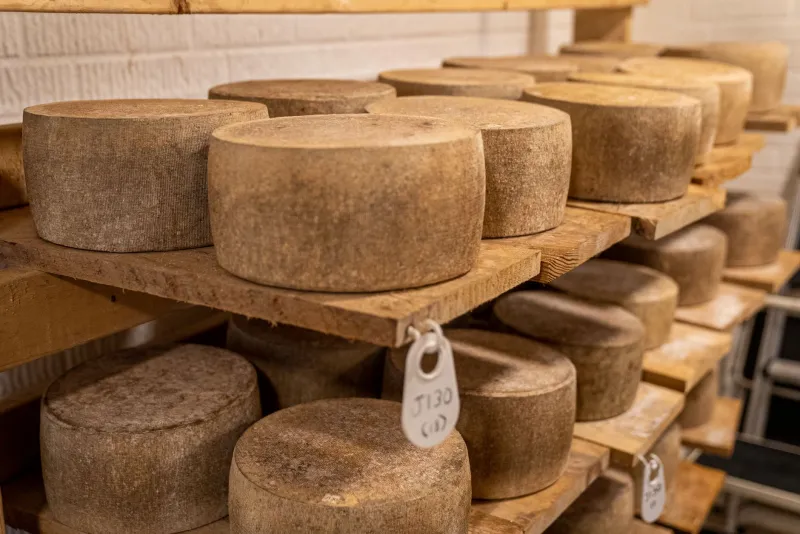
There's a wheel of cheese aging on a pine shelf in a converted barn outside of Greensboro that smells faintly of hay, butter, and something almost floral — like the meadow it came from is still somehow present inside the rind. That's not an accident. It's the whole point.
Vermont has always been dairy country. But for decades, the story of the small dairy farm here has been one of slow attrition — squeezed out by industrial-scale operations, fluctuating milk prices, and a market that seemed to reward volume over craft. The numbers told a grim story: in 1947, Vermont had over 11,000 dairy farms. By the early 2020s, fewer than 700 remained.
But something has quietly shifted. Tucked into hollows and perched on hillsides across the state, a growing community of artisanal cheesemakers is using the craft to do what commodity milk markets couldn't: make small-scale dairying financially viable again. And they're doing it by making cheese that people genuinely lose their minds over.
Heritage Breeds, Distinctive Milk
The foundation of exceptional Vermont cheese often starts before the vat, before the cultures, before any human hands get involved. It starts with the animal.
A number of the state's most celebrated cheesemakers have made a deliberate choice to work with heritage or alternative dairy breeds — Jerseys, Guernseys, Brown Swiss, and even East Friesian sheep — rather than the Holstein cows that dominate industrial dairy. The milk from these animals tends to be richer in butterfat and protein, with a complexity that reflects what the animals eat and where they graze.
"You can taste the difference between a cow that spent the summer on our high pasture versus one that's been on hay all winter," says one cheesemaker in the Northeast Kingdom, who produces a raw-milk tomme that's developed a devoted following at farmers markets from Burlington to Brattleboro. "The cheese is basically a diary of what happened on this farm. Every wheel is different."
That terroir-driven philosophy — borrowed, in spirit, from the wine world — is central to what makes Vermont's artisan cheese scene feel distinct from even other well-regarded American cheese regions. This isn't just about technique. It's about place.
The Art and Science of Aging
If the milk is the canvas, aging is where Vermont's cheesemakers are doing some of their most inventive work.
Across the state, producers are experimenting with unconventional approaches to the cave, the cellar, and the shelf. Some are rubbing rinds with local spirits — think maple whiskey or apple brandy from nearby cideries — to develop complex, boozy crusts that complement the paste inside. Others are aging wheels on boards of Vermont-harvested spruce or wrapping soft cheeses in leaves cured with local wine.
One cheesemaker in the Champlain Valley has been exploring what she calls "ambient aging" — a method that embraces the naturally occurring molds and bacteria in her stone farmhouse cellar rather than trying to control every variable. The results are unpredictable in the best possible way: each batch develops its own personality, its own bloom.
"I'm not trying to make the same cheese every time," she explains. "I'm trying to make the best cheese this milk, this cellar, this season can produce."
That kind of creative risk-taking has paid off. Vermont artisan cheeses have racked up a remarkable string of wins at national and international competitions — including awards at the American Cheese Society competition and recognition from judges who've tasted their way through the finest dairies in Europe.
Reviving the Rural Economy, One Wheel at a Time
The cultural cachet of craft cheese is satisfying, but the economic impact is what really matters for rural Vermont communities.
When a farm transitions from selling commodity milk — often at prices that don't cover the cost of production — to producing value-added cheese, the math changes dramatically. A hundred pounds of milk that might fetch a modest return as a bulk commodity can become hundreds of dollars worth of aged cheese. That transformation doesn't happen overnight, and it requires significant investment in equipment, licensing, and skill. But for farms that have made it work, the results can be genuinely transformative.
Beyond the individual farm, the ripple effects are real. Artisan cheese operations support local feed suppliers, equipment repair businesses, and the farmers market ecosystems that have become anchors of Vermont's regional food economy. Some cheesemakers have formalized those connections further, sourcing milk from neighboring farms that couldn't sustain their own creamery operations — creating small, informal dairy cooperatives built around shared economic survival.
Restaurants have taken notice, too. Vermont chefs — particularly in Burlington, Woodstock, and Stowe — have made local cheese a cornerstone of their menus, not just as an afterthought on a charcuterie board but as a featured ingredient in composed dishes. That visibility drives consumer awareness and, ultimately, sales.
Where to Find Vermont's Best
The good news for anyone who wants to eat their way through this scene is that Vermont makes it pretty easy. The Vermont Cheese Trail connects visitors to creameries across the state, many of which offer tastings and farm tours. Farmers markets in Burlington, Montpelier, and beyond consistently feature local cheesemakers. And a growing number of specialty food shops — including the legendary Cabot Annex Store and independent grocers around the state — have made curating local cheese a priority.
If you want to go deep, keep an eye out for names like Consider Bardwell Farm, Jasper Hill Farm, and Shelburne Farms — operations that have been at the forefront of Vermont's cheese renaissance for years and continue to set the bar for what's possible here. But don't sleep on the smaller, newer producers who are just starting to find their voice. Some of the most exciting cheese in Vermont right now is coming from creameries that opened within the last decade, made by people who came to cheesemaking from careers in cooking, science, and sustainable agriculture.
The Bigger Picture
Vermont's artisan cheese movement is about more than flavor — though, to be clear, the flavor is exceptional. It's about finding a sustainable path forward for the kind of small, diversified, land-connected farming that has defined this state's identity for generations. It's about proving that quality, story, and relationship can compete in a market that has long favored scale and efficiency.
Every time someone buys a wedge of raw-milk cheddar at a farmers market or orders a cheese plate at a farm-to-table restaurant in Burlington, they're participating in something larger than a transaction. They're voting for a food system that makes room for the 40-cow farm, the stone cellar, and the cheesemaker who can tell you exactly which pasture her animals grazed on last Tuesday.
That's the sweet spot, right there. And Vermont is finding it, one rind at a time.