Slow Grown, Well Raised: The Vermont Farmers Bringing Heritage Breeds Back to the Table
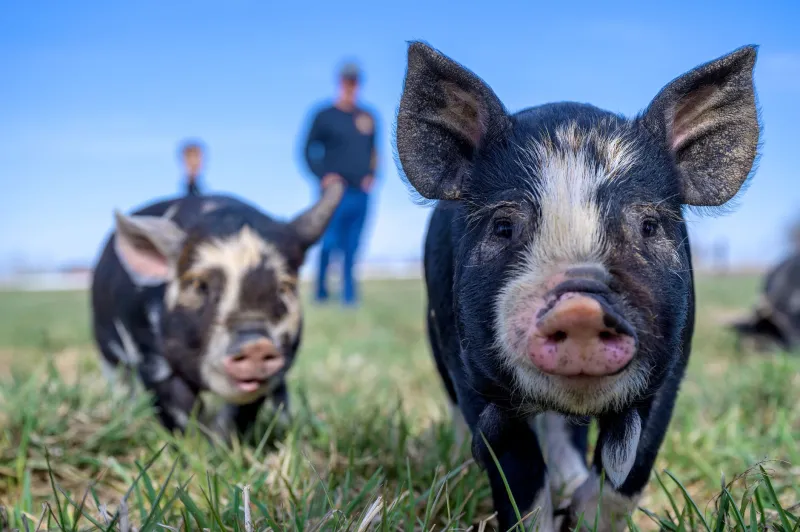
There's a moment — usually somewhere between the first bite of a properly raised pork chop and the quiet realization that you've been eating something entirely different your whole life — when the whole heritage breed conversation clicks into place. It's not abstract anymore. It's not a marketing term on a chalkboard menu. It's flavor, and it's unmistakable.
Vermont has always had a particular relationship with its land. The Green Mountain State's stubborn, rocky terrain never made industrial farming easy, which means small-scale agriculture never fully disappeared here the way it did in flatter, more "efficient" parts of the country. That legacy is now proving to be a serious advantage. A growing network of Vermont farmers is leaning into heritage breeds and regenerative grazing not as a trend, but as a return to something that was always hiding just beneath the surface.
What Makes a Heritage Breed, Anyway?
Before we get into the farms, it's worth unpacking the term. Heritage breeds are livestock varieties that existed before the industrialization of agriculture — animals that were bred over generations for hardiness, adaptability, and flavor rather than rapid weight gain or uniform appearance. Think Tamworth pigs instead of commodity white pigs. Dorkings and Buckeyes instead of Cornish Cross chickens. Devon and Belted Galloway cattle rather than the feedlot-optimized breeds that dominate industrial operations.
The difference on the plate is significant. Heritage animals grow more slowly, develop more intramuscular fat, and typically spend their lives in environments that match their biology — on pasture, in woodlots, foraging and rooting and doing what animals actually do. That slower growth and varied diet translates directly into depth of flavor, better fat distribution, and a texture that holds up beautifully to the kind of low-and-slow cooking Vermont winters practically demand.
Roots Down Deep: Profiling Vermont's Heritage Pioneers
Take the work being done by farms tucked into the Northeast Kingdom — Vermont's wild, sparsely populated northeastern corner — where a handful of producers have been quietly building herds and flocks of rare breeds for the better part of a decade. One such operation raises Ossabaw Island hogs, a breed descended from Spanish pigs brought to the American coast centuries ago. Ossabaws are small, slow-growing, and produce pork with a fat composition closer to lard-type heritage breeds than anything you'd find in a grocery store. Farmers who raise them will tell you the breed practically raises itself — it's adapted to forage and thrive on varied pasture — but that the payoff in flavor is extraordinary.
Further south, in the Champlain Valley, small family farms are bringing Narragansett and Bourbon Red turkeys back into rotation. These birds take twice as long to reach market weight as commercial breeds, and they cost more to raise. But the farmers raising them argue — convincingly — that the resulting meat is incomparable: deeper in color, richer in flavor, with a texture that doesn't turn to mush the moment it hits heat. Several of these farms have built direct relationships with Vermont chefs who plan their fall menus around the birds months in advance.
The Chef Connection
That chef relationship piece is worth lingering on, because it's doing a lot of heavy lifting in this story. Heritage breed farming is economically precarious without reliable buyers who understand and value the product. Vermont's farm-to-table restaurant scene — which has been quietly punching above its weight for years — has become a critical partner in making the math work.
Chefs across Burlington, Stowe, Woodstock, and beyond have become advocates not just for the flavor but for the farming philosophy. Some have gone as far as co-designing their menus around what specific farms are producing in a given season, treating heritage pork belly or pasture-raised lamb the same way they treat a great local cheese: as a featured ingredient with a story worth telling to the guest sitting at the table.
This partnership also pushes farmers toward whole-animal thinking. When a restaurant commits to buying a whole pig or a full lamb, the farmer doesn't have to fight to move less popular cuts. Suddenly the shoulder, the offal, the trotters — all of it finds a home. That economic efficiency makes the model more sustainable, and it gives chefs the creative latitude to work with parts of the animal that most diners would never think to order.
Regenerative Farming: The Ground Beneath It All
You can't talk about heritage livestock in Vermont without talking about the land those animals live on. Many of the farmers in this space are practicing some form of regenerative agriculture — rotational grazing, managed pasture recovery, cover cropping — that treats soil health as the foundation of everything else. The idea is simple but profound: healthy soil grows healthier grass, healthier grass raises healthier animals, and healthier animals produce better food.
Some farmers describe the shift from conventional to regenerative as a mindset change as much as a practical one. You stop thinking of your land as a production input and start thinking of it as a living system you're responsible for stewarding. In Vermont, where the land has its own strong opinions about what it will and won't support, that kind of humility tends to go over well.
Finding It on Your Plate — and in Your Market Bag
If you want to taste what this movement is producing, your options are better than ever. Vermont farmers markets — from Burlington's sprawling Saturday market to smaller weekly gatherings in Brattleboro, Middlebury, and Montpelier — have become reliable spots to find heritage pork, pastured poultry, and grass-finished beef from farms you can actually visit and ask questions about. Many producers also run CSA-style meat shares, which let you build a relationship with a single farm over a full season.
And of course, if you're eating out in Vermont, don't be shy about asking where the meat on your plate comes from. The best restaurants here want to tell you. The answer, increasingly, is a farm you can picture — a specific hillside, a specific farmer, a specific breed with a history worth knowing.
That's the sweet spot, really. Not just better-tasting food, but food that's connected to something real. Vermont's heritage farmers aren't just raising animals. They're keeping a different kind of story alive.