From Field to Crust: Vermont's Artisan Bakers Are Rewriting the Loaf
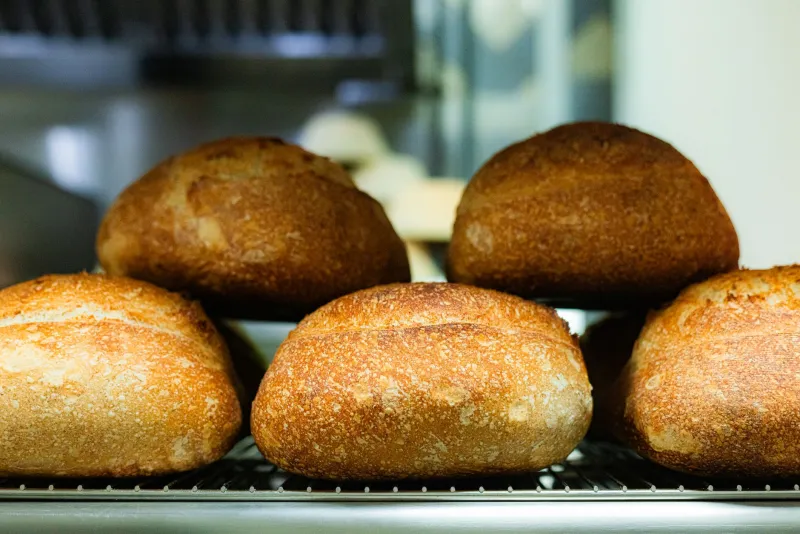
There's a loaf sitting on the counter at a small bakery in the Northeast Kingdom that looks almost nothing like the bread most Americans grew up with. It's dense but not heavy, with a crackly, burnished crust and a crumb that's open and irregular in all the right ways. It smells faintly of earth and something sour and alive. The baker who made it will tell you, without a trace of pretension, that it took her three days to produce — and that the flour came from a farm twenty minutes down the road.
This is what bread looks like when it means something.
Across Vermont, a growing community of artisan bakers is pushing back against the century-long reign of industrial white flour and the soft, shelf-stable loaves it produces. They're sourcing heritage and ancient grain varieties — spelt, einkorn, emmer, red fife — from a small but increasingly ambitious network of Vermont grain farmers. They're working with natural starters that have been fed and tended for years. And they're turning out bread that carries the unmistakable fingerprint of a specific place, a specific season, a specific harvest.
Call it the farm-to-loaf movement. It's been building quietly for years, and right now, it's having its moment.
Why Ancient Grains, and Why Now?
For most of the twentieth century, wheat breeding focused almost exclusively on yield and gluten strength — qualities that made industrial baking faster and more predictable, but stripped a lot of flavor and nutritional complexity out of the grain itself. Modern bread wheat is remarkably uniform. It behaves. Ancient grains, by contrast, are a little wild.
Spelt, one of the older cultivated wheats, has a nuttier, slightly sweet flavor profile and a more delicate gluten structure that responds beautifully to slow fermentation. Einkorn — sometimes called the original wheat — is even more nutritionally dense and carries a rich, almost buttery taste. Emmer falls somewhere in between, with an earthy depth that bakers tend to describe as "wheaty in the way wheat forgot to be."
These grains don't behave like modern bread flour. They require a different touch, a longer hand, and a baker willing to learn the grain's particular personality rather than force it into a standard recipe. That challenge, it turns out, is exactly what's drawing Vermont bakers in.
"There's a learning curve that never really ends," says one baker who runs a small operation out of a converted barn in the Champlain Valley. "Every harvest is different. The flour I'm milling from this year's spelt is not the same as last year's. You have to pay attention in a way that industrial baking just doesn't ask of you. I find that exciting. Some days I find it maddening. But the bread is always interesting."
The Farmers Making It Possible
None of this works without the grain farmers, and Vermont's small-scale grain-growing scene — while still modest compared to the big wheat states — has been quietly expanding. A handful of farms across the state have started dedicating acreage to heritage varieties, often working directly with bakers to develop relationships that look more like partnerships than simple supply chains.
For these farmers, heritage grains represent both a philosophical commitment and a practical opportunity. Commodity grain markets are brutal, and small Vermont farms can't compete on volume. But they can compete on quality, traceability, and story — and bakers who care about those things are willing to pay a fair price for flour that comes with all three.
Some bakers have taken it a step further by investing in their own stone mills, giving them complete control over the milling process and allowing them to work with whole-grain and high-extraction flours that preserve more of the bran, germ, and the complex flavors that come with them. Stone-milled flour doesn't have the same shelf life as refined white flour — the oils in the germ will eventually go rancid — but bakers who mill fresh say the tradeoff in flavor is worth every logistical headache.
"Fresh-milled flour smells like something," says one baker who sources her grain from two Vermont farms and mills it herself twice a week. "It smells alive. Once you bake with it, you understand what's been missing from bread for a very long time."
Sourdough as a Practice, Not a Trend
The natural fermentation piece of this movement is equally important — and equally misunderstood. Sourdough has had a complicated few years in the cultural conversation, caught between genuine craft tradition and the kind of pandemic-era hobbyist frenzy that produced a lot of mediocre loaves and a lot of Instagram content. Vermont's serious bakers are largely uninterested in the trend version of sourdough. What they're practicing is something older and more disciplined.
A well-maintained sourdough starter is a living ecosystem — a community of wild yeasts and lactic acid bacteria that leavens bread and, crucially, transforms the grain in the process. Long fermentation breaks down phytic acid, making minerals more bioavailable. It develops organic acids that give bread its characteristic tang and complexity. It changes the texture of the crumb and the keeping quality of the finished loaf in ways that commercial yeast simply can't replicate.
For bakers working with heritage grains, sourdough fermentation isn't just a stylistic choice — it's often the key to making those grains sing. The slower, gentler rise accommodates the more fragile gluten structures of ancient wheats. The acidity of a well-developed levain can balance the earthier, more assertive flavors of whole-grain flours. The two traditions — heritage grain and natural fermentation — are deeply complementary, and the bakers who've figured out how to work them together are producing loaves of remarkable depth.
What This Means for Vermont's Food Economy
Beyond the flavor conversation, there's a real economic story here. Every bag of locally grown, stone-milled heritage grain flour that a Vermont baker uses instead of commodity flour from the commodity supply chain represents a small but meaningful shift in where food dollars flow. It keeps money circulating within the state. It supports farmers taking risks on crops that don't have guaranteed markets. It builds the kind of regional food infrastructure that makes Vermont's agricultural economy more resilient over time.
It also gives Vermont eaters something increasingly rare: bread with genuine provenance. You can know which farm grew the grain, which mill processed it, which baker shaped the loaf. That chain of accountability — short, transparent, and rooted in actual relationships — is exactly what the industrial food system was designed to obscure.
Finding the Bread
If you haven't stumbled across this movement yet, the best way in is simply to start looking. Farmers markets across the state are increasingly home to small-batch bakers selling heritage-grain loaves alongside the vegetables and cheese. Some bakeries offer subscription shares, much like a CSA — a weekly or biweekly loaf, often varying by what's in season and what the harvest brought. A few farms sell directly from their own storefronts or through buying clubs.
The bread won't be cheap, and it shouldn't be. What you're paying for isn't just flour and salt and water. You're paying for three days of a baker's attention, for a farmer's decision to grow something harder and riskier than commodity wheat, for a tradition of fermentation that goes back thousands of years, and for a loaf that — genuinely, honestly — tastes like Vermont.
That's a sweet spot worth finding.