More Than a Jar of Gold: Vermont's Beekeepers Are Redefining What Honey Can Be
There's a jar of honey on the counter at a farmstand in Addison County that doesn't look like anything you'd find at a chain grocery store. It's dark — almost amber-brown — with flecks of pollen suspended in it like snowflakes frozen mid-fall. The label reads Buckwheat Raw, Unfiltered and lists a single ingredient. The woman behind the table, a beekeeper named Sarah Duchamp who runs about forty hives on her property outside Middlebury, watches you pick it up and smiles. "That one tastes like the earth," she says. "People either love it or they're not ready for it."
This is what Vermont honey looks like right now — and it's a long way from the plastic bear.
What the Hive Actually Has to Offer
For most of American food culture, honey has been treated as a single-note ingredient: sweet, golden, interchangeable. But Vermont's growing community of artisan beekeepers has been quietly making the case that honey is as terroir-driven as wine, as complex as a well-aged cheese, and as regionally specific as a block of sharp cheddar from a small dairy cooperative.
The flavor of honey is a direct reflection of what's blooming within a few miles of the hive. In Vermont, that means the product changes dramatically depending on where you are and when the bees are working. Early-season honey pulled from hives near apple orchards in the Champlain Valley carries a delicate floral brightness. Midsummer production from hives set near clover fields in the Northeast Kingdom has that classic sweetness most people associate with the stuff. Late-season buckwheat honey — harvested after the bees have worked the dark-flowered crop that some Vermont farms grow as a cover crop — is something else entirely: rich, almost molasses-like, with a depth that works beautifully in a marinade or stirred into a strong cup of tea.
The point isn't just that these honeys taste different. It's that they tell a story about a specific place at a specific time. That's a very Vermont idea.
Raw, Unfiltered, and Unapologetic
One of the biggest shifts happening in the Vermont beekeeping community is the move toward raw and minimally processed products. Conventional commercial honey is typically heated and filtered to give it a uniform appearance and extend its shelf life. The tradeoff is that the process strips out a lot of what makes honey interesting — pollen, enzymes, trace compounds that contribute to both flavor and the health properties that honey enthusiasts love to talk about.
Vermont's small-scale producers are largely skipping that step. Raw honey, which is extracted and bottled without significant heat treatment, often looks cloudier and may crystallize faster. But beekeepers like Duchamp and others around the state have found that customers who try the real thing rarely go back.
"Once someone understands what they're actually tasting — the specific flowers, the specific season — they get it," says Marcus Webb, who keeps hives across two properties in Washington County and sells at the Montpelier Farmers Market. "The crystallization thing used to be a hard sell. Now people ask for it. They know it means the honey is real."
Beyond Honey: The Whole Hive Is on the Menu
If raw honey is the gateway, the deeper rabbit hole is everything else the hive produces. Vermont beekeepers are increasingly bringing a full range of hive products to market, and the response from consumers — especially those already tuned into the farm-to-table ethos — has been strong.
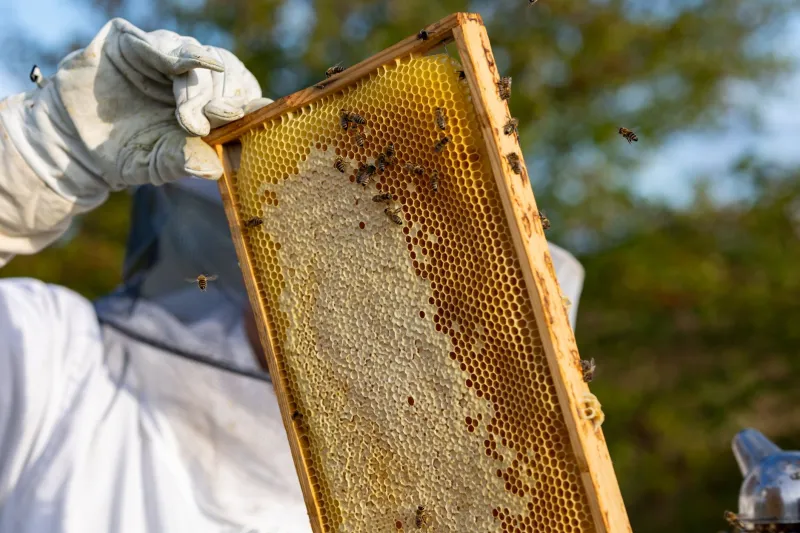
Raw honeycomb is having a moment. Thick sections of beeswax comb filled with cured honey, cut into squares and sold as-is, have found a devoted following among home cooks and chefs alike. Spread on a warm piece of bread, paired with a wedge of aged Vermont cheddar, or draped over a charcuterie board, honeycomb delivers flavor and texture that no extracted product can replicate. Several Vermont restaurants have started featuring it on their cheese programs, sourcing directly from beekeepers within driving distance.
Bee pollen — the protein-rich pellets that worker bees pack into the hive as food — has crossed over from health food stores into more mainstream kitchens. Vermont producers are selling it fresh or dried, and curious cooks are finding ways to work it into granola, yogurt bowls, and even salad dressings. The flavor is floral and slightly bitter, with a crunch that adds something unexpected.
Propolis, the resinous substance bees use to seal gaps in the hive, is less well-known but increasingly available from Vermont apiarists as tinctures, throat sprays, and balms. It's been used in traditional medicine for centuries, and while the health claims require some nuance, the demand is real — particularly among consumers who are already buying directly from local farms and thinking carefully about what they put in and on their bodies.
Beekeeping as Ecological Stewardship
None of this happens in a vacuum. Vermont's beekeeping community is acutely aware that the business case for artisan honey products is inseparable from the broader conversation about pollinator health. Colony collapse disorder, pesticide exposure, habitat loss, and the spread of the varroa mite have made beekeeping genuinely difficult in recent years. Small-scale Vermont producers have largely responded by doubling down on sustainable practices — avoiding chemical treatments where possible, planting pollinator-supportive forage on and around their properties, and working with neighboring farms to reduce pesticide exposure during bloom periods.
Many of them have also made education a core part of what they do. Farmstand conversations, hive tours, social media, and participation in events like the Vermont Beekeepers Association's annual meetings have helped build a more informed customer base — one that understands why local honey costs more than the grocery store version and why that difference matters.
"When people know the bees, they care about the bees," says Webb. "And when they care about the bees, they start thinking about everything else that depends on them — the vegetables, the fruit, the whole system."
That's the farm-to-table argument made in miniature: the hive isn't separate from the food system. It's one of the things holding it together.
Finding Vermont Honey Worth Seeking Out
The best way to find the real stuff is to show up. Vermont farmers markets, farmstands, and natural food co-ops are the most reliable sources for small-batch, locally produced honey and hive products. The Vermont Beekeepers Association maintains a directory of member producers, and many beekeepers sell directly from their farms — sometimes by appointment, sometimes with a self-serve honor-system stand at the end of a dirt road.
When you're shopping, don't be afraid to ask questions. Where are the hives? What's blooming nearby? Has the honey been heated? Is the comb available? A beekeeper who's proud of their work will talk your ear off, and you'll leave knowing exactly what's in that jar — and why it tastes the way it does.
Vermont honey, at its best, is a small and specific miracle: the concentrated flavor of a particular hillside in a particular season, made by insects that have been doing this for millions of years. The beekeepers working in this state right now are just making sure it gets the attention it deserves.