Rise and Resist: Vermont's Grain Millers and Morning Chefs Are Making Breakfast Worth Waking Up For
Let me say something that might sound a little dramatic for a food website: what you eat for breakfast is a form of politics.
Stick with me here.
When most Americans sit down to breakfast, they're eating something that was engineered in a corporate test kitchen, produced at industrial scale, stripped of most of its nutritional complexity, and then sold back to them with a cartoon mascot and a health claim on the box. The grain in that cereal, that muffin, that pre-packaged oatmeal packet — it was grown in a monoculture, processed into near-oblivion, and shipped across the country before it ever touched your bowl.
In Vermont, a growing number of farmers, millers, and chefs are doing something different. They're treating breakfast like it matters. And the results are, without exaggeration, transforming what morning food can be.
The Mill Before the Meal
You can't talk about Vermont's breakfast revolution without talking about what's happening at the grain level. Stone-milling — the practice of grinding whole grains slowly between two millstones, preserving the germ and bran that industrial roller milling strips away — has been quietly resurging in the state over the past decade. (We've written about some of these millers before, and the story keeps getting richer.)
What matters for breakfast specifically is what stone-milling does to flavor and nutrition. Whole-grain oats that are milled and rolled fresh taste nothing like the cardboard-flat flakes in a grocery store canister. Heritage wheat flours carry a depth and nuttiness that makes a simple morning porridge something worth lingering over. Cornmeal ground from open-pollinated varieties has a sweetness and complexity that instant grits could never approximate.
Several Vermont mills are now producing breakfast-specific products — rolled grains, coarse-ground porridge blends, whole wheat pastry flours — specifically in response to demand from both home cooks and professional kitchens. "We started getting calls from restaurants that wanted a specific grind for their overnight oats program," says one Northeast Kingdom miller who asked not to be named because he's tired of being written about and just wants to mill grain in peace. (Understandable, honestly.) "That's when I realized breakfast was becoming its own thing."
What the Chefs Are Doing with It
Walk into Hen of the Wood in Burlington on a weekend morning and you'll find a breakfast menu that reads like a love letter to Vermont's grain economy. Chef Eric Warnstedt — who has spent years building relationships with local producers — treats his morning grains with the same sourcing rigor he applies to his meat and produce. The porridge on the menu isn't an afterthought. It's the point.
This approach is spreading. Across the state, from Stowe to Brattleboro, a cohort of breakfast-focused chefs and café owners are building their morning menus around what's available from Vermont's grain supply chain. Heritage wheat pancakes made with stone-milled flour. Overnight oats built on rolled grains from farms less than fifty miles away. Polenta bowls using cornmeal that still smells like the field it came from.
At a small café in Middlebury that's become something of a pilgrimage site for grain enthusiasts, the kitchen makes their own granola from scratch using oats sourced directly from a farm in the Champlain Valley, sweetened with local maple, and finished with seeds from a Northeast Kingdom seed company. It costs more than a bag of Bear Naked. It tastes like it was made by someone who gives a damn — because it was.
"Breakfast has always been treated as the lesser meal," says the café's owner, who opened the spot after years of working in fine dining and getting frustrated that the morning meal never got the same creative attention as dinner. "But it's the meal people eat every single day. If you're going to change how someone relates to local food, breakfast is where you do it."
Heritage Grains and the Overnight Commitment
One of the more interesting developments in Vermont's breakfast scene is the embrace of slow-food techniques in a meal category that's been almost entirely colonized by convenience culture. Overnight oats — which involve soaking whole or rolled grains for twelve or more hours to improve digestibility and develop flavor — have become a canvas for serious culinary creativity.
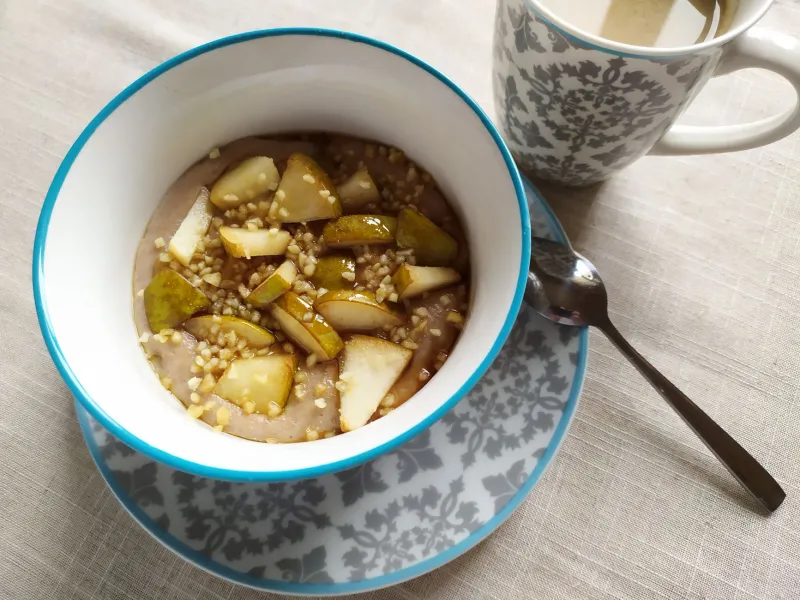
When you start with a genuinely good grain, soaked overnight, you get something with texture and flavor that instant oatmeal can't touch. Add local dairy (or a good plant-based alternative from one of Vermont's growing number of small-batch producers), some maple, fresh or preserved fruit from the summer's harvest, and maybe a spoonful of something fermented for brightness, and you have a breakfast that's as thoughtfully composed as any dinner plate.
Several Vermont chefs are also exploring heritage grain baking as a morning practice — not the sourdough-boom version that went viral during the pandemic, but something more grounded in regional grain identity. Spelt, emmer, and einkorn — ancient wheat relatives that fell out of commercial use because they're harder to process at industrial scale — are showing up in breakfast breads, scones, and pastries at a handful of Vermont bakeries and café kitchens. They're denser, more flavorful, and more nutritionally intact than their commodity wheat counterparts.
Why It Matters Beyond the Plate
Here's the part where I'll admit the politics again. When a Vermont chef sources their breakfast grains from a local mill that sources from a Vermont farm, money moves differently. It stays in the state. It supports a farmer who's making decisions about soil health, seed selection, and land stewardship. It funds a miller who's preserving knowledge and equipment that would otherwise disappear.
When you eat a bowl of porridge made from Vermont-grown, stone-milled oats, you're participating in a food system that's trying to be something other than extractive. That's not nothing. That's actually kind of everything.
And it tastes better. That part matters too.
The Morning That's Coming
Vermont's breakfast culture is still finding its shape. There are more mills opening, more chefs getting serious about morning menus, more home cooks discovering that a fifty-pound bag of freshly milled whole wheat flour is one of the best investments they can make in their daily life.
The cereal aisle isn't going anywhere. But neither are the people who've decided it isn't good enough.
Some mornings, the most radical thing you can do is sit down with a bowl of something real, grown close to home, and actually taste it.