Green Thumb Mystics: The Vermont Gardeners Who Tend Their Plots Like Sacred Ground
Susan Lafleur has been growing vegetables in the same half-acre plot outside of Hardwick for going on thirty years. She can tell you the nitrogen content of her soil, rattle off the Latin names of her cover crops, and explain exactly why she rotates her brassicas the way she does. She can also tell you, without a hint of embarrassment, that she sings to her zucchini.
"I started doing it as a joke," she admits, crouching down to pull a stray grass blade from the edge of a bed. "Then one summer my neighbor's zucchini was a disaster and mine was basically a zucchini emergency. I'm not saying the singing did it. I'm also not not saying that."
This is Vermont gardening at its most wonderfully strange — a place where the practical and the mystical have always shared a fence row, where a gardener might check the almanac, inoculate their bean seeds with rhizobium bacteria, and whisper encouragement to a struggling pepper plant all before breakfast.
The Lunar Faithful
Planting by the moon is probably the oldest unconventional gardening practice still in active use, and in Vermont, it has a devoted following. The basic idea: the gravitational pull of the moon affects soil moisture the same way it affects ocean tides, meaning certain lunar phases are better for planting, pruning, or leaving well enough alone.
Mark Thibodeau, a retired schoolteacher who farms a serious kitchen garden in Addison County, has followed a biodynamic planting calendar for over a decade. "I was skeptical for years," he says. "Then I started keeping records, just out of curiosity, and my transplant survival rate went up noticeably when I started timing things to root days and leaf days."
Horticulturalists will tell you the scientific evidence for lunar planting is thin. Thibodeau knows this. He also knows what his notebooks say. "I'm not asking anyone to believe me," he shrugs. "I'm just telling you what I've observed."
That kind of pragmatic mysticism — I can't prove it, but look at my garden — turns out to be pretty common among Vermont's most dedicated home growers.
Companion Planting as Community
A few miles outside of Montpelier, Diane Kessler tends a garden that looks, at first glance, like organized chaos. Marigolds ring the tomatoes. Dill towers over the cucumbers. Nasturtiums tumble out of every available corner. This is not randomness — it's companion planting taken to something close to an art form.
"People think companion planting is just about pest control," Kessler says, deadheading a spent marigold bloom with practiced efficiency. "But I think of it more like building a neighborhood. Some plants just do better when they have the right neighbors."
The science here is actually pretty solid — marigolds do repel certain pests, the classic Three Sisters combination of corn, beans, and squash genuinely supports soil health and structure — but Kessler has pushed the concept into more intuitive territory. She talks about "reading" the garden, noticing which plants seem to thrive together beyond what any chart would predict.
"Last year I put lemon balm near my eggplant on a hunch," she says. "Best eggplant I've ever grown. Is that the lemon balm? Probably not entirely. But something was working."
Talking to Plants: The Science Is Weirder Than You Think
Here's something interesting: the idea that plants respond to sound and vibration is not purely folk wisdom. Research has shown that plants can detect and respond to vibrations, including sound frequencies, in ways that affect growth and even chemical defenses. Studies out of the University of Missouri have demonstrated that plants respond differently to the sound of caterpillar chewing versus other vibrations — suggesting a form of sensory awareness that would have sounded absurd to scientists a generation ago.
None of this definitively proves that Susan Lafleur's zucchini is improved by her off-key rendition of "Country Roads." But it does suggest that the line between folk wisdom and emerging science is blurrier than we tend to assume.
"I think Vermont gardeners have always known things that took scientists a while to catch up to," says Lafleur. "We've been composting and building soil microbiomes for generations before anyone called it that."
The Microbiome Underground
If there's one place where unconventional Vermont gardening wisdom and cutting-edge soil science have fully converged, it's in the growing obsession with soil biology. Home gardeners across the state are now talking casually about mycorrhizal networks, bacterial-to-fungal ratios, and compost teas with the same fluency they once reserved for NPK fertilizer numbers.
Jeremy Oakes, who homesteads outside of Craftsbury with his family, has essentially stopped tilling his garden entirely. He layers compost, wood chips, and cover crops, lets the worms and fungi do the structural work, and harvests vegetables that he describes — not immodestly — as "almost unfairly good."
"My grandfather tilled every spring because that's what you did," Oakes says. "But he was also fighting his soil his whole life. I'm trying to work with it."
The no-till approach is increasingly mainstream in sustainable agriculture, but for Oakes it carries an almost philosophical weight. "You start thinking about the soil as alive, as a community of organisms you're responsible for, and your whole relationship to the garden changes."
What Vermont Gets Right
Maybe the most honest answer to the question of whether these unconventional methods actually work is: probably some of them, some of the time, for reasons that are partially understood and partially mysterious — and that Vermont gardeners have always been comfortable sitting with that uncertainty.
This is a state where people have been growing food in challenging conditions — short seasons, rocky soil, unpredictable springs — for centuries. The methods that survived that long tend to have something going for them, even if the explanation has evolved from "the moon tells you when" to "soil moisture gradients respond to gravitational pull."
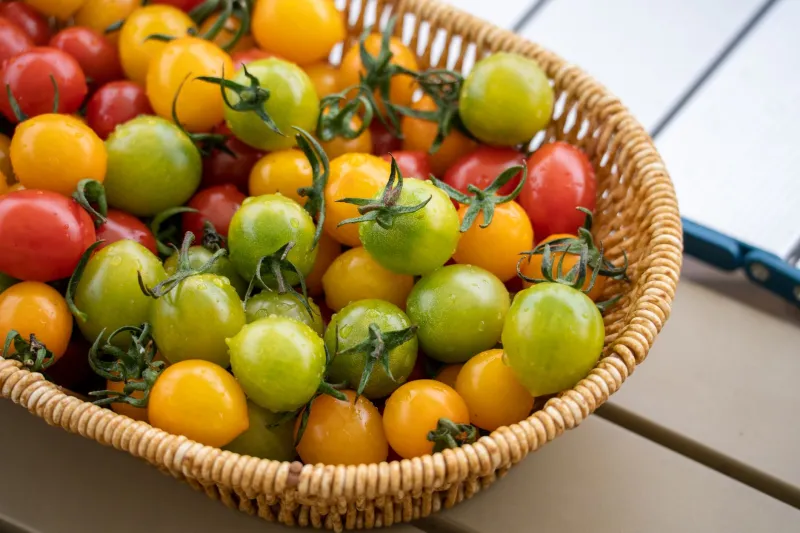
Susan Lafleur pulls a handful of cherry tomatoes off the vine and holds them out. They're warm from the sun, deeply red, and taste like what tomatoes are supposed to taste like. Whether the singing helped is genuinely unknowable. Whether it matters is a different question.
"It makes me happy to do it," she says simply. "And I think that probably comes through somehow."
In Vermont, that might be the most sensible gardening philosophy of all.