Smoke Signals: Vermont's Pitmasters Are Building a Barbecue Tradition All Their Own
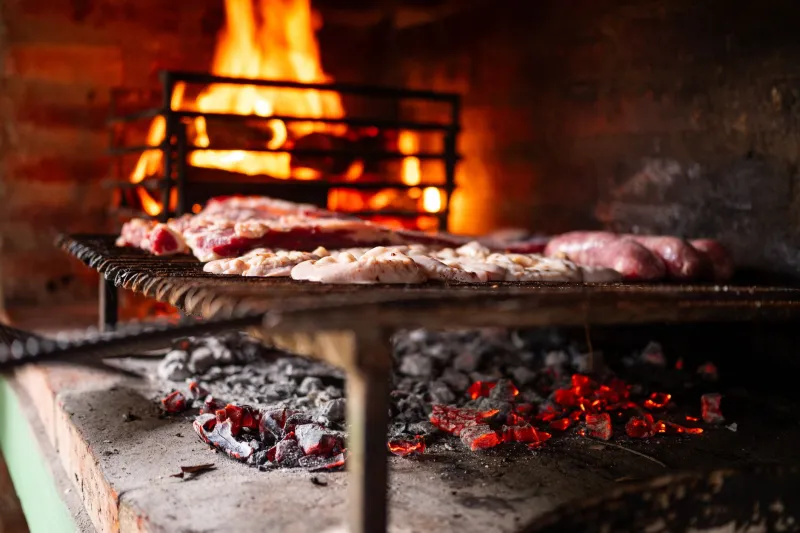
Let's get one thing out of the way: nobody here is claiming Vermont invented barbecue. The pitmasters working wood fires across the state are the first to acknowledge the deep, complex, regionally specific traditions — Texas brisket, Carolina pulled pork, Kansas City ribs — that gave American smoke cooking its identity. They've studied those traditions. Many of them have eaten their way through them.
But they're not trying to replicate them, either. What's happening in Vermont's emerging smokehouse scene is something more interesting than imitation: it's an attempt to build a regional smoke tradition from scratch, using the animals, the wood, and the agricultural character of this particular place as the raw material.
Starting with the Animal
Every serious Vermont pitmaster will tell you the same thing: it starts with the pig, or the cow, or the lamb — and it starts with who raised it.
Nick Beaumont runs a small smokehouse operation out of his property in Randolph, selling at farmers markets and doing occasional pop-up events at a local taproom. His brisket comes from a single farm in Orange County where he's watched the cattle graze. His pork ribs come from a heritage-breed operation in the Northeast Kingdom that raises Berkshire and Tamworth crosses. The difference in the finished product, he argues, is not subtle.
"When you smoke a factory-farmed rib, you're fighting the meat the whole time," he says, adjusting the damper on a custom-built offset smoker he welded himself. "When you smoke a Berkshire rib from an animal that spent its life outside and ate real food, the fat renders differently, the texture is different, the flavor is already there. You're just bringing it out."
Heritage-breed pork has become a kind of cornerstone ingredient in Vermont's smoke scene, and for reasons that go beyond flavor. These breeds — Berkshire, Red Wattle, Ossabaw, Mangalitsa — are well suited to small-scale, pasture-based farming, which aligns naturally with Vermont's agricultural landscape. The farmers raising them are often the same people supplying Vermont's artisan butchers and farm-to-table restaurants. For a pitmaster trying to source locally, they're a natural fit.
The Wood Question
If the meat is the soul of Vermont barbecue, the wood is its accent. And here, the state has something genuinely distinctive to offer.
Vermont's hardwood forests are dominated by sugar maple, yellow birch, and apple — all of which produce excellent smoking wood with flavor profiles that differ meaningfully from the hickory and oak that anchor Southern and Midwestern barbecue traditions. Maple smoke is sweeter and slightly more delicate. Apple wood burns cooler and imparts a subtle fruitiness. Birch sits somewhere between the two — mild, clean, with a faint sweetness.
For pitmaster and former line cook Renata Souza, who runs a pop-up smoke operation in the Burlington area, the choice of wood is as intentional as the choice of meat. She sources her apple wood from an orchard in Addison County that prunes its trees every winter and sells the cuttings as smoking wood. Her maple comes from a sugarbush in Washington County that harvests wood as part of its forest management program.
"I want the smoke to taste like Vermont," she says simply. "When someone eats my pork, I want the flavor to tell them something about where they are."
She's developed what she calls a "maple-forward" approach — using maple as the primary wood for longer cooks and finishing with apple over the last hour or two to add brightness. The result is a smoke ring and bark that look familiar to anyone who knows barbecue but carry a flavor that doesn't belong to any other region.
Writing the Rules as They Go
One of the genuinely exciting things about Vermont's smoke scene is that it has no rulebook yet. The regional traditions of the South took generations to codify — the specific cuts, the rubs, the sauces, the arguments about sauce at all. Vermont's pitmasters are at the very beginning of that process, and they know it.
Nick Beaumont has been experimenting with smoking cuts that don't have a strong precedent in American barbecue: lamb shoulder from a farm in Putney, whole smoked chicken stuffed with maple-glazed onions, a pork belly cure that uses Vermont-made apple cider vinegar and local maple syrup in the brine. Some of it works brilliantly. Some of it teaches him something and gets filed away.
"There's no one to tell me I'm doing it wrong," he says, and it's clearly a source of pleasure rather than anxiety. "I can make mistakes. I can try things. Eventually some of this becomes tradition, but right now it's all just curiosity."
Renata Souza has been developing what she calls a "Vermont rub" — a dry spice blend built around ingredients that can be sourced entirely within the state: dried herbs from a farm in Craftsbury, coarse salt from a Vermont sea salt producer, dried maple sugar, and a small amount of dried chili from a grower in the Champlain Valley. It's still evolving, but it's hers, and it's from here.
The Cultural Conversation
Building a regional barbecue tradition in a state that is overwhelmingly white and has no historical connection to the Southern communities where American smoke culture was born raises questions worth sitting with. The pitmasters working in Vermont's scene are, by and large, aware of them.
"I have a lot of respect for what barbecue means in Texas, in the Carolinas, in Kansas City," Nick Beaumont says. "Those traditions are tied to place and to people in ways that are really specific. I'm not trying to claim any of that. I'm trying to figure out what smoke cooking means here, in this place, with these ingredients."
Renata Souza, who grew up in Brazil and came to food through a completely different culinary tradition, sees Vermont's smoke scene as a genuinely open conversation. "Every culture has smoke cooking," she says. "It's one of the oldest things humans do with food. Vermont can have its version without taking anything from anyone else. The question is just: what does that version actually taste like?"
The answer is still being written, one slow cook at a time.
A Fire Worth Tending
On a cold Saturday morning in Randolph, Nick Beaumont is up before dawn, loading the firebox of his smoker with split maple. The briskets went on at midnight. The ribs will go on at six. By early afternoon, when the farmers market opens, he'll have a modest but devoted line of people waiting for a taste of something that doesn't quite exist anywhere else.
Vermont barbecue isn't a finished thing. It's a fire that's been lit, tended by a handful of people who believe that a state with this much good meat, this much good wood, and this much respect for where food comes from has something worth saying with smoke. Give it time. Give it a few more winters and a few more thousand pounds of heritage pork and apple-wood coals. The tradition is coming together, slowly, the way the best things in Vermont always do.